
Is Hiring an Interior Designer Worth It? (Honest Answer Here)
Maybe you’re holding a paint chip in your lap right now, wondering if a designer is even worth it. Let’s talk through it together.
It’s one of the most common questions I get asked.
By clients across the kitchen table. By family at Thanksgiving. By people who reached out three years ago and just haven’t pulled the trigger.
It’s a really good question. And as someone who has been on the designer side of this conversation a LOT, I want to give you an honest guide. Not a sales pitch. If you know me or if you have followed me for any length of time… you know that I will tell you the truth – gently but it will be the truth.
So let’s dig in and chat about it.
The short version: Hiring an interior designer tends to be worth it when your project is bigger than one room. When you’ve started and stopped on this project so many times you can’t see straight anymore. When you’re a little scared of making a choice you’ll have to live with for the next ten years. And here’s one a lot of people miss — when you have a vision in your head but you’re not quite sure how to pull it off. Vision is one thing. Execution is a different skill. A designer is who you hire when you have the picture but not the path.
OK. Let’s get into the longer answer.
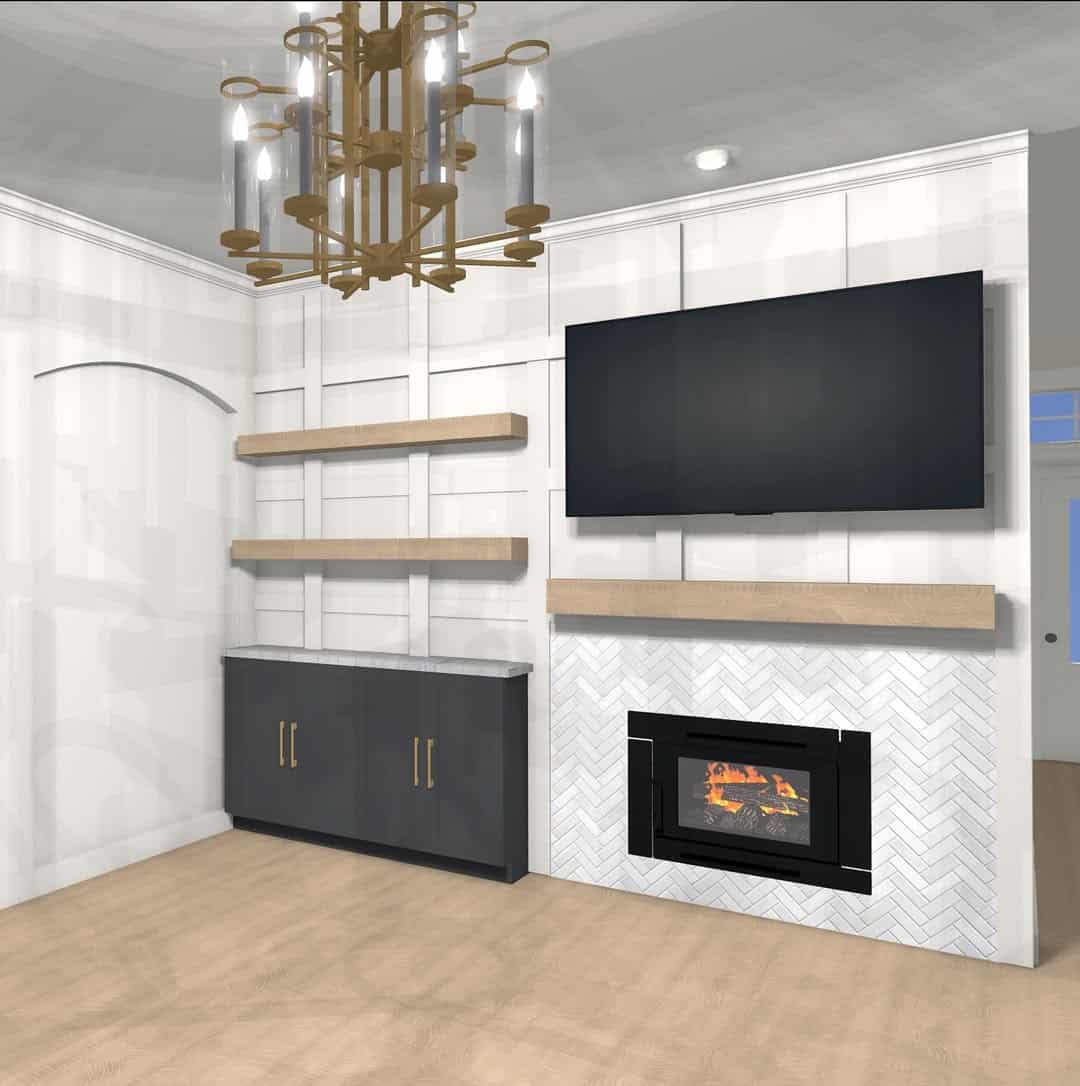
The Aspiring Home Interiors.com
What does an interior designer actually do?
The pretty pictures? They’re the smallest part of the work.
Most of what a good designer does happens long before anyone picks a paint color.
When a designer walks into a home for the first time, we’re noticing things you might not have a reason to notice.
Which way does the house sit? North, south, east, west? Because that is going to change how every paint reads on the wall throughout the day.
How many windows are in the room? What is each room actually used for? Are there walls cutting off natural light in the open concept?
Where does your eye land when you stand in the doorway?
In an open concept, we’re thinking about how color moves from one space to the next. If you’ve got a great room flowing into a kitchen flowing into a dining area, that’s one continuous canvas. The light hits each part differently.
Sometimes a designer will adjust a paint by 25% in one zone so the whole space reads as one home instead of three rooms fighting each other.
We’re thinking about your strategic bolder color moments. An alcove that’s begging for a deeper hue. A powder room that can take a bigger swing. The way the drapery and the artwork and the rug all need to talk to each other in a way that feels harmonious. Almost melodic.
When it’s working? You feel it the second you walk in.
And one thing I want you to hear, because it matters.
A designer is not a personal shopper.
The pretty things you can buy on your own. Pinterest will show you a hundred pretty sofas in an afternoon.
What a good designer brings is the layered work that holds a room together. The pieces you don’t always think to ask about until you’re already standing in the finished space wishing you had.
Layered lighting is one of the biggest, my friends.
Most homeowners think about a chandelier and call it done. A designer is thinking about your ambient layer, your task layer, and your accent layer — and how they all switch on and off together across the day.
Electrical is another one we hold for you.
Where does the outlet go behind the console? Are there enough plugs near the bed? Is there a three-way switch at the top AND bottom of the stairs? Is there a switch by the front door that controls the lamp across the room so you can flip everything off as you head up to bed?
And foresight.
So many of the questions a good designer asks before any work begins are the ones that save you from regret later.
The beloved chair you love to read in — does it have a plug nearby for a reading lamp? Or are you going to be running an extension cord across the room for the next five years?
A designer catches that BEFORE the drywall closes up. Not after.
A lot of the homes I’ve walked into across Prosper, Frisco, Plano, and McKinney, a previous owner had painted everything beige to “warm it up.” Such an understandable instinct! But all that beige did was fight the furniture and the drapery and the accessories coming into the room.
The room wanted to be honest about its bones. The beige was hiding them.
That’s what you’re really hiring a designer for … The way we hold the whole house in our heads at once.
How much does an interior designer cost in Prosper, Frisco, and the DFW area?
Let’s just put this on the table.
Full-service designer fees vary widely depending on scope. Hourly rates typically fall in the $150 to $300 range. Flat-fee project pricing depends on what’s being built together.
If full-service feels like more than your project needs, many designers also offer hourly consultations or a block of consultation time at a lower entry point. We’ll talk about how that can look in my own practice at the end of this post.
But the number itself? It matters less than whether the designer can walk you clearly through what you’re paying for and why.
A clear fee structure is the first sign you’re working with someone who knows what they’re doing.
The math nobody really talks about.
The designer fee is the only number you see going in.
But there’s a quieter set of costs that show up later when people have done a project on their own.
The rug that turned out to be just a little too small. The sofa that wouldn’t quite fit through the front door. The paint that had to be redone because at night it read so different than at noon. The chandelier hung at a height that has been bugging you for two years. The plug that ended up six feet from the reading chair instead of next to it. The “I’ll just live with it for now” that quietly becomes a five-year compromise you stopped loving on day three.
Those costs add up.
When a designer is in the mix? Most of those costs don’t happen.
You pay the fee. You skip the regrets.
The math usually works out in your favor.
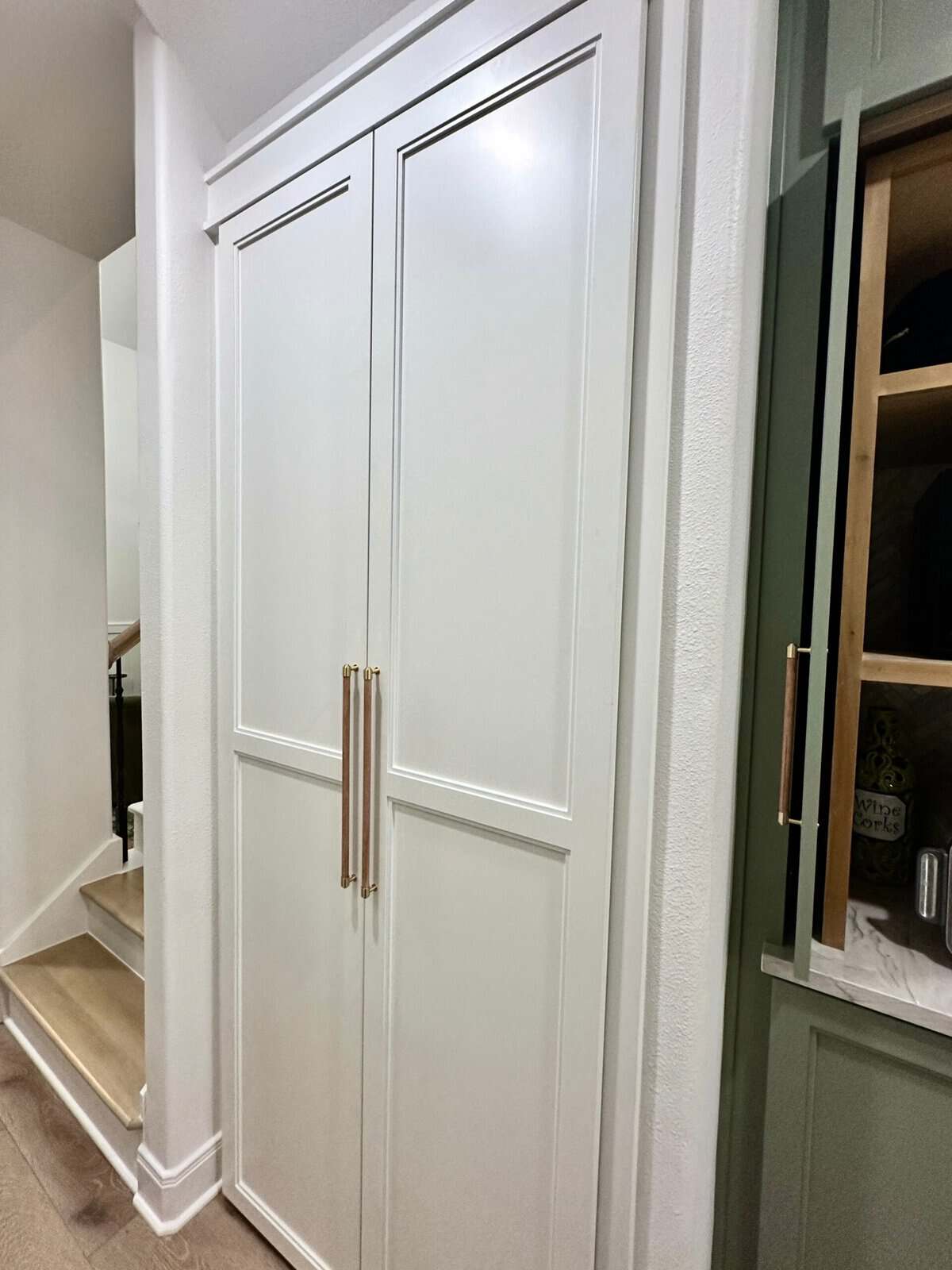
When might hiring a full-service designer not be the right fit?
Before I list the times you don’t need a designer, I want to clear up something I think a lot of homeowners get wrong.
Hiring a designer for just one room can absolutely be worth it.
A designer for one well-thought-out room is one of the smartest investments a homeowner can make IF you have a vision in your head but you’re not quite sure how to pull it off.
Vision is one thing, my friends.
Pulling off the layered lighting, the right proportions, the texture mix, the electrical placement, the way the eye moves across the space — that’s a different skill set entirely.
So when might a designer NOT be the right fit for your project?
If you’re buying one piece — a single armchair, a dining table, a light fixture — and you already know exactly how it works with everything around it. A Saturday afternoon and a tape measure can carry you a long way there.
If your project is genuinely tiny. One accessory. One paint color in a room you’re otherwise happy with.
If you’re getting a home ready to sell quickly. A great stager is going to serve you better than a designer in that moment. A stager’s training is specifically about making a home read well to the broadest possible buyer.
And if you already have most of the decisions made and what you really need is someone to help you execute, a trusted contractor or installer is going to be your better partner. The collaboration designers do best is shaping the decisions WITH you. Not just carrying them out.
When IS hiring a designer worth it?
When you have a vision in your head but you can’t quite see how to pull it off.
When your project is bigger than one room.
When there are construction decisions in play and the wrong call costs real money.
When you’ve been turning the same decision over in your head for three months and you’re ready for someone to sit down with you and walk you through it.
When you’ve started and stopped and started and stopped.
When the project has been dragging on long enough that it’s starting to wear on you.
When you want a home that feels like you instead of a home that looks like a magazine.
This is where a good designer earns the trust placed in them, my friends.
Sitting at your kitchen table, asking how your family actually lives in this space. Building something that works for the way you really use the rooms, not the way the floor plan thinks you should. Choosing the right neutral for the big visible rooms so bold can live in the rooms where bold belongs. Planning the lighting, the outlets, the millwork, and the flow long before anyone picks up a roller. Walking you through the why behind every choice so your home keeps making sense to you long after the project is done.
When it goes well, you’re not getting a designer-decorated house. You’re getting your house, designed.
A quick story from a Frisco great room.
A few years ago a family in Frisco found themselves having painted their great room twice. Twice!
They were exhausted and frustrated.
They had done what so many homeowners do. Picked a “warm neutral” from a tiny chip. Painted the whole great room. Hated it at night. Repainted lighter. Hated it at noon. Repainted again.
By the time we sat down together, they didn’t know off the top of their heads which way their house actually sat. We looked it up. Southwest-facing great room with three big west-wall windows.
The paint they had been picking was actually beautiful. In a north-facing house. In a southwest room with afternoon sun, those same colors went orange and warm in a way they hated by 4 p.m.
What did we do?
We chose a different neutral built for that light, adjusted it 25% lighter in the alcove off the great room. Then we brought in a deeper navy for the powder room and a strategic bolder hue for the dining area.
Then we mapped out the layered lighting they didn’t even realize they were missing. Added a switched outlet near the reading chair the wife had been parking lamp extension cords across the floor to reach. Reset the dimmer plan so the whole room could move from morning bright to evening soft with one swipe.
The whole house started to sing.
That’s the kind of clarity a good designer brings, my friends. Not magic. Just experience. Asking the right questions before anyone picks up a roller.
Let’s shine a little more light on this subject in a different way by going through some frequently asked questions…
What’s the difference between an interior designer and an interior decorator?
A decorator works with finishes and furnishings.
A designer can also help with the bones of the house. Walls, plumbing, lighting layouts, electrical planning, millwork.
If your project touches construction or layered lighting or electrical in any way? You want a designer in the conversation.
Is an interior designer the same as a personal shopper?
Nope. Not even close.
A personal shopper finds you the things. A designer is doing the layered work that holds a room together. Layered lighting. Electrical and outlet planning. Proportion. Texture. The flow of how your eye moves from one corner to the next.
A designer is also doing the foresight work. The plug you didn’t know to ask for near your reading chair. The switch that controls the lamp by the front door. The outlet behind the console you’ll wish was there in three years if it isn’t there now.
They are different jobs entirely.
What if I have a vision but don’t know how to execute it?
That might be the single best reason to hire a designer, my friends.
Vision is one thing. Pulling off the layered lighting, the right proportions, the electrical placement, the texture mix, and the way the eye moves through a space — that’s a different skill.
If you have the picture but not the execution, a designer for one room (or many) is one of the smartest investments you can make.
How much does an interior designer cost?
Full-service designer fees vary widely. Hourly rates typically fall in the $150 to $300 range. Flat-fee project pricing depends on the scope of work.
Many designers also offer hourly consultations or a block of consultation time at a lower entry point — a way to bring a designer in for input without committing to full-service.
Will a designer push me to buy things I can’t afford?
A good designer won’t.
A good designer works inside the budget you give them. If your budget isn’t quite realistic for what you’re hoping for, a good designer will share that with you up front and either scale things down or suggest waiting for the right timing.
If a designer is pushing you past your budget, that’s a sign to keep looking.
How long does a designer project take?
A single room? Usually six to twelve weeks.
A whole home? Usually six to twelve months.
Renovations take longer because the designer is on the contractor’s schedule and on the lead times of every vendor along the way.
Can I hire a designer for just one room?
Yes, absolutely.
Many designers (myself included) offer single-room projects, consultations, and design plans you can carry out on your own. You don’t have to commit to the whole house to have professional eyes on what you’re working on.
And honestly? If you’ve got a vision but you’re not sure how to pull it off, hiring a designer for one room is often where the magic happens.
How do I know if a designer is the right fit?
After one conversation you should feel three things.
Heard. A little more organized than when you started. And a little excited.
If you ever feel pushed, talked over, or like you’re being sold something? Please keep looking. The right designer should feel like someone has stepped onto your team.
Ready to take the next step? Here’s how I can help.
You’ve made it to the bottom of the post, which probably means you’re sitting with the answer to whether a designer is right for your project.
If the answer feels like yes, click this link at The Aspiring Home Interiors to learn more.
One last thing…
The real reason to hire a designer isn’t really about ending up with a pretty house.
You can stumble into a pretty house with enough Pinterest hours and enough patience.
The real reason is so you don’t have to carry it alone. So you stop being frozen at the same decision week after week. So you wake up in a home that fits your life — and quietly works for you in a hundred small ways you wouldn’t have thought to ask for.
Like the plug that’s right where you wanted it. The lighting layer that softens the room at 7 p.m. without you flipping a single switch. The neutral that holds the whole house together at noon and at midnight.
That’s what Where house becomes home® means to me. It isn’t a tagline.
It’s the work.
Until later my friends, keep creating home.


Joy Maier is the founder and principal designer of The Aspiring Home Interiors, an award-winning studio serving the greater Dallas area and beyond. Blending gracious living with elevated design expertise, Joy creates interiors that feel deeply personal, beautifully refined, and effortlessly livable — from full-home renovations to boutique vacation rentals. Her professional affiliations include ASID (Associate), ART, the Interior Design Society (Professional), NKBA, VRD Collective, and she is a founding member of Designers for Dogs. Since 2012, she has shared design tips and heartfelt stories on The Aspiring Home Blog. Her philosophy is simple: “Design should feel like a deep breath. When we get it right, your home greets you with that exhale every single day.”